

Japan vs Sweden: World Cup 2026 Group F Finale Preview
For a punting audience, that is the entire shape of the fixture. Japan can afford patience and game management. Sweden cannot. When a team must chase, it tilts the texture of the match toward open spaces and transitions, and that is exactly the kind of game in which both sets of attackers could thrive. The angles sit in how far Sweden have to commit, and how clinically Japan can punish it.
Few final-round group games are as cleanly poised as this one. Japan, level at the top of Group F with the Netherlands on points and goal difference, need only a draw to confirm their place in the knockout rounds. Sweden, a point back and reeling from a five-goal battering, must win or go home. One side controls its destiny with the handbrake on; the other has to throw everything forward.
Manager tactics
Hajime Moriyasu's Japan have been the more convincing side through two games, following a spirited 2-2 draw with the Netherlands with a ruthless 4-0 dismantling of Tunisia. Their 3-4-2-1 is built on positional intelligence, quick combination play through the inside channels, and wing-backs who provide width without leaving the back three exposed. Knowing a draw is enough, Japan will be content to control possession, frustrate, and pick their moments to break. The danger for them is complacency: a side playing not to lose can invite pressure it does not need to.
Sweden line up in a mirror-image 3-4-1-2, also using three centre-backs and wing-backs, but their mandate could not be more different. They must be the aggressor. The forward pairing of Viktor Gyokeres and Alexander Isak gives them genuine penalty-box quality, and Anthony Elanga offers the pace to attack the space behind Japan's high line. The risk is structural. The more bodies Sweden push forward in search of the winning goal, the more they expose themselves to precisely the counter-attacks Japan are set up to launch.
Pre-game interview highlights
Japan's camp has carried the calm of a team that knows it is in control. The emphatic Tunisia win, in which Ayase Ueda scored twice, reinforced a belief that this is one of the most balanced Japanese squads to reach a World Cup, and the messaging has been about finishing the job with the same discipline rather than chasing a statement result they do not need.
Sweden's framing is all about response. The 5-1 loss to the Netherlands was a chastening night, and the narrative since has been about pride, character, and the simple reality that anything less than a win ends their tournament. For a side whose form has swung wildly, from five goals against Tunisia to conceding five against the Dutch, the question is which Sweden turns up when the stakes are highest.
Team performance expectations
Japan should be comfortable in possession and content to let the game come to them. The realistic expectation is a controlled, low-risk performance in which they look to strike on the break and manage the tempo, leaning on their structure to soak up whatever Sweden throw at them. The Opta supercomputer makes them favourites, and on the evidence of six goals in two games, the attacking threat is real. The one vulnerability is mindset: a team protecting a result can drift into passivity.
Sweden's expected output is high-volume and high-risk. They will commit numbers forward, lean on their strikers to convert the chances they create, and accept the defensive exposure that comes with it. For investors, the asymmetry is the play: Japan carry the cleaner path and the counter-attacking upside, while Sweden offer the volatility of a side that must gamble. These are expectations about approach, not a prediction of any scoreline.
Three Japan players to watch
- Ayase Ueda is in the form of his life. The Feyenoord striker won the 2025-26 Eredivisie Golden Boot with 25 league goals, taking the award by an eight-goal margin, and carried that touch straight into the tournament with a brace against Tunisia. His movement and finishing make him the focal point of everything Japan do in the final third, and against a Sweden side that must push up, his runs in behind are a constant threat.
- Takefusa Kubo is Japan's most reliable creator from wide and the player most likely to unlock a stretched defence. The Real Sociedad winger contributed two goals and four assists in 24 La Liga appearances in 2025-26, and his ability to drift inside and combine in tight areas is tailor-made for a transition-heavy game. If Sweden over-commit, Kubo is the man to make them pay on the counter.
- Daichi Kamada pulls the strings from the pocket behind Ueda. The experienced playmaker opened the scoring against Tunisia inside four minutes, the fastest World Cup goal in Japan's history, and his vision and late runs into the box give Japan a second layer of threat. In a game Japan want to control, his composure on the ball is central to dictating the tempo.
Three Sweden players to watch
- Viktor Gyokeres is the spearhead Sweden's hopes hang on. Fresh off a debut campaign at Arsenal in which he scored 14 Premier League goals and 19 in all competitions, he opened his World Cup account with a goal and an assist in the rout of Tunisia. Powerful, direct and relentless in behind, he is precisely the kind of striker who punishes a high defensive line, and Japan's willingness to push up could play into his hands.
- Yasin Ayari is the breakout man trending sharply upward. The Brighton midfielder announced himself with two stunning long-range strikes against Tunisia, the kind of from-distance threat that can break a stubborn, deep-lying Japanese block when clear chances are scarce. In a must-win game, a midfielder who can manufacture a goal from nothing is exactly the profile Sweden need.
- Anthony Elanga brings the pace that could stretch Japan to breaking point. He scored Sweden's lone consolation against the Netherlands and offers the directness to attack the channels in transition. With Sweden forced to play on the front foot, his ability to run in behind and carry the ball at speed makes him a key outlet, alongside the constant presence of strike partner Alexander Isak.
The Takeaway
This is a clash defined by what each side can afford. Japan have the better balance, the in-form striker, and the luxury of needing only a point, and in Ueda, Kubo and Kamada they carry the counter-attacking quality to punish a team that has to come out. Sweden have the raw firepower to win any game, but their must-win mandate hands Japan exactly the open spaces they thrive in. The performance expectation leans Japanese; the volatility, and the danger, comes from a Sweden side with nothing left to lose. Read the approach, weigh the matchup, and draw your own line.
Autor: John Dawson



Zona de desafios
0 jogos disponíveis
Últimas Notícias
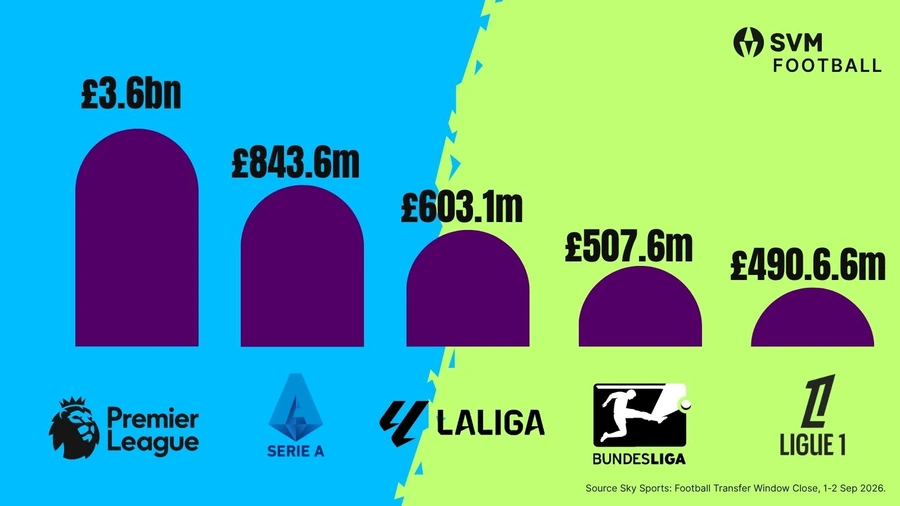
Premier League Transfer Market: Buyer Of Last Resort
Premier League clubs spent a record £3.56bn in summer 2026 while Ligue 1 banked a £511.3m surplus. The gap is not wealth. It is two different business models.

Spain Are World Champions: La Roja Outlast Argentina to Win World Cup 2026
Spain are champions of the world again. Sixteen years after their first title, Luis de la Fuente's side beat Argentina 1-0 after extra time at the New York New Jersey Stadium, with substitute Ferran Torres settling a bad-tempered final and ending the reigning champions' reign.

Spain vs Argentina: The World Cup 2026 Final in Numbers
Spain arrived as the tightest defence in 60 years. Argentina arrived as the comeback kings with a 39-year-old still rewriting the record book. The World Cup 2026 final is a clash of two football identities, and the Opta numbers tell the whole story.

England 6-4 France: Anatomy of a 10-Goal Bronze-Final Classic
Saka's hat-trick, Mbappe's record, a 4-0 lead nearly blown: the player performances, manager calls and key moments behind England 6-4 France.
Tuchel vs Deschamps: Two Tactical Blueprints, One World Cup Lesson
How Thomas Tuchel's possession machine and Didier Deschamps' transition game shaped England and France at the 2026 World Cup, read through the performance data.