

Spain vs Argentina: The World Cup 2026 Final in Numbers
Spain arrived as the tightest defence in 60 years. Argentina arrived as the comeback kings with a 39-year-old still rewriting the record book. The World Cup 2026 final is a clash of two football identities, and the Opta numbers tell the whole story.
Some finals are decided by a moment. This one is a collision of two entire worldviews. Spain reached it as the most controlling, most miserly side the modern World Cup has produced. Argentina reached it as the tournament's great survivors, dragged forward again and again by the oldest outfield genius the game has ever seen. The European champions against the reigning World Cup holders is the fixture the format was built for, and the Opta record shows exactly why it is so hard to separate them.
The records stacked on the table
Start with the history, because it is loaded. This is only the second time Spain and Argentina have met at a World Cup; the first, back in 1966, ended in a 2-1 Argentina group-stage win. It is also the first time the reigning CONMEBOL Copa America champions have faced the reigning UEFA European champions in a World Cup final. Two continents' current kings, one trophy.
The final day has arrived: tonight's match for pure enjoyment - and whoever wins the cup deserves it. Will Messi replay the Qatar World Cup scenario, or will Spain have the final say this evening?#WorldCup #mundialdefútbol2026 #ESPARG
— SVM | Football, Decoded (@SVMFootball) July 19, 2026
Both arrive on historic streaks. Spain are unbeaten in 37 matches in all competitions (W28 D9) since a 1-0 loss to Colombia in March 2024; avoid defeat here and they own the longest unbeaten run by a European nation in history, moving clear of Italy's matching 37. Argentina have won 14 in a row, level with Brazil's South American record run from 1997, and have taken all seven of their 2026 games. Win, and they become the first side since Brazil in 2002 to go through an edition with a 100% record, an eighth straight win that would stand as the second-longest winning streak in World Cup history behind Brazil's 11 across 2002-06.
There is a warning buried in the data for the holders. This is the sixth time a reigning champion has reached a World Cup final. The first two won it (Italy 1938, Brazil 1962), but the last three all lost (Argentina 1990, Brazil 1998, France 2022). Spain, for their part, have won five of their six major tournament finals, and only Germany (7) and Italy (6) have lifted more major titles among European nations.
The tightest defence in six decades
Spain's route to the final was not a spectacle. It was a stranglehold. No side at the 2026 World Cup has faced fewer shots on target per game (1.4), and they have allowed opponents an expected-goals figure of just 0.31 per game - the lowest of any team in the tournament and the joint-lowest on record since 1966, matched only by Uruguay in 1990. They became the first side in World Cup history to keep six clean sheets in a single edition, and they have not trailed for a single minute. Only three teams have ever won the World Cup without going behind at any point: Italy in 1938 and 1982, and Germany in 1990.
The final's own passing map reads like a Spain manifesto. They dominated the ball at 64.6% to 35.4%, out-passed Argentina by close to two to one, and did it at 89.9% accuracy against 79.1%. The territorial gap was starker still: 170 passes in the opposition half to Argentina's 67, and a final-third passing accuracy of 76.3% against just 34.8%. This is control used as a weapon, not as decoration.
Argentina's fingerprint is the mirror image. They go more direct (a 13.8% long-pass proportion to Spain's 6.6%), they win the battles that break Spain's rhythm, and above all they own the air, taking 66.7% of the aerial duels. Where Spain pass you into submission, Argentina wait, absorb, and strike - which is precisely how they have played all tournament.
𝗧𝗪𝗢 𝗘𝗡𝗗𝗦 𝗢𝗙 𝗛𝗜𝗦𝗧𝗢𝗥𝗬:
— SVM | Football, Decoded (@SVMFootball) July 19, 2026
Messi, 39 - 2nd-oldest to play a World Cup final (behind Dino Zoff) and only the 2nd man to reach three finals, level with Cafu.
Yamal, 19 - 3rd-youngest ever in a final, behind only Pelé and Bergomi. #WorldCup2026 #Messi #ESPARG… pic.twitter.com/mgEiWocyPw
The individuals who bend it
At the centre of everything is Lionel Messi. He is set to become just the second player in World Cup history to appear in three finals (2014, 2022, 2026), matching Brazil's Cafu. The output at 39 defies the birth certificate: he has been involved in 15 goals across his last nine World Cup knockout matches (7 goals, 8 assists), scoring or assisting in every one. His four assists in the 2026 knockouts are the most by any player since Pele in 1970, and his 19 chances created sit just shy of the only two men to reach 20+ in a knockout stage since 1966 (Wolfgang Overath in 1970 and Xavi in 2010). He scored twice in the 2022 final; only Vava and Kylian Mbappe have ever scored in consecutive World Cup finals.
Opposite him is the future. Lamine Yamal, at 19 years and six days, will be the third-youngest player ever to appear in a World Cup final, behind only Pele (1958) and Giuseppe Bergomi (1982). Over the last 60 years, no teenager has produced more shots (23), shots on target (10) or touches in the opposition box (51) at a World Cup. The two share a remarkable stat line: they are the tournament's two leading dribblers, Messi with 25 completed (the most by any player aged 30+ since 1966) and Yamal with 22 (joint-most by a teenager, level with Mbappe in 2018). One dribble count belongs to a man closing his story, the other to a teenager opening his.
Around them, the supporting numbers matter. Marc Cucurella has been ever-present at left-back and was not dribbled past across the knockout rounds; Mikel Merino became the first player with multiple knockout-stage winners as a substitute; and Julian Alvarez has landed four of his five career World Cup goals in knockout rounds. Even the dugout carries a record: every World Cup has been won by a manager from the same country as his team, and Lionel Scaloni could become only the second man to retain the trophy, after Italy's Vittorio Pozzo in 1934 and 1938.
Reading the edge before the scoreline
Here is the quiet lesson in all these numbers. The story was legible long before kickoff. An xG-allowed of 0.31, a 37-game unbeaten run, eight goals scored between the 76th and 90th minute - these are not surprises, they are signals, visible to anyone reading performance rather than reputation. That is exactly the discipline SVMarkets and sportvalue.app are built on: spotting where the real strength and the real risk sit while the rest of the room is still arguing about names.
Whatever the result, the tale of this final is already written in the data. One side turned control into an art form. The other turned resilience into a habit, with a 39-year-old conducting until the last whistle. Two philosophies, one trophy, and a record book that will remember whichever one holds.
Autor: John Dawson

Zona de desafios
0 jogos disponíveis
Últimas Notícias
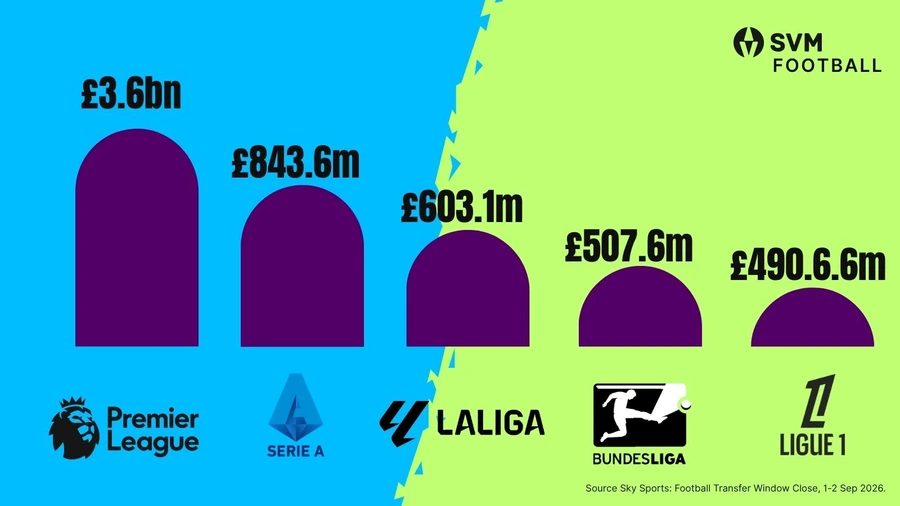
Premier League Transfer Market: Buyer Of Last Resort
Premier League clubs spent a record £3.56bn in summer 2026 while Ligue 1 banked a £511.3m surplus. The gap is not wealth. It is two different business models.
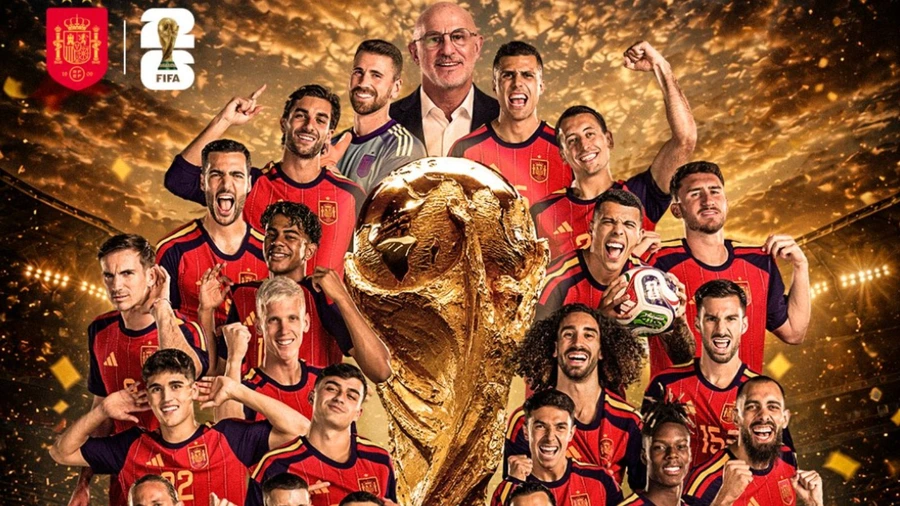
Spain Are World Champions: La Roja Outlast Argentina to Win World Cup 2026
Spain are champions of the world again. Sixteen years after their first title, Luis de la Fuente's side beat Argentina 1-0 after extra time at the New York New Jersey Stadium, with substitute Ferran Torres settling a bad-tempered final and ending the reigning champions' reign.

England 6-4 France: Anatomy of a 10-Goal Bronze-Final Classic
Saka's hat-trick, Mbappe's record, a 4-0 lead nearly blown: the player performances, manager calls and key moments behind England 6-4 France.
Tuchel vs Deschamps: Two Tactical Blueprints, One World Cup Lesson
How Thomas Tuchel's possession machine and Didier Deschamps' transition game shaped England and France at the 2026 World Cup, read through the performance data.
England vs Argentina: Inside the Numbers and the Plans That Will Shape a Semi-Final
Argentina's Title Defence Is More Than Messi
Mac Allister, Alvarez and Lautaro did the scoring. Messi pulled the strings. Argentina are into the World Cup 2026 semi-finals on the strength of a whole squad, not one man - and that is exactly what makes the champions so hard to knock out.