
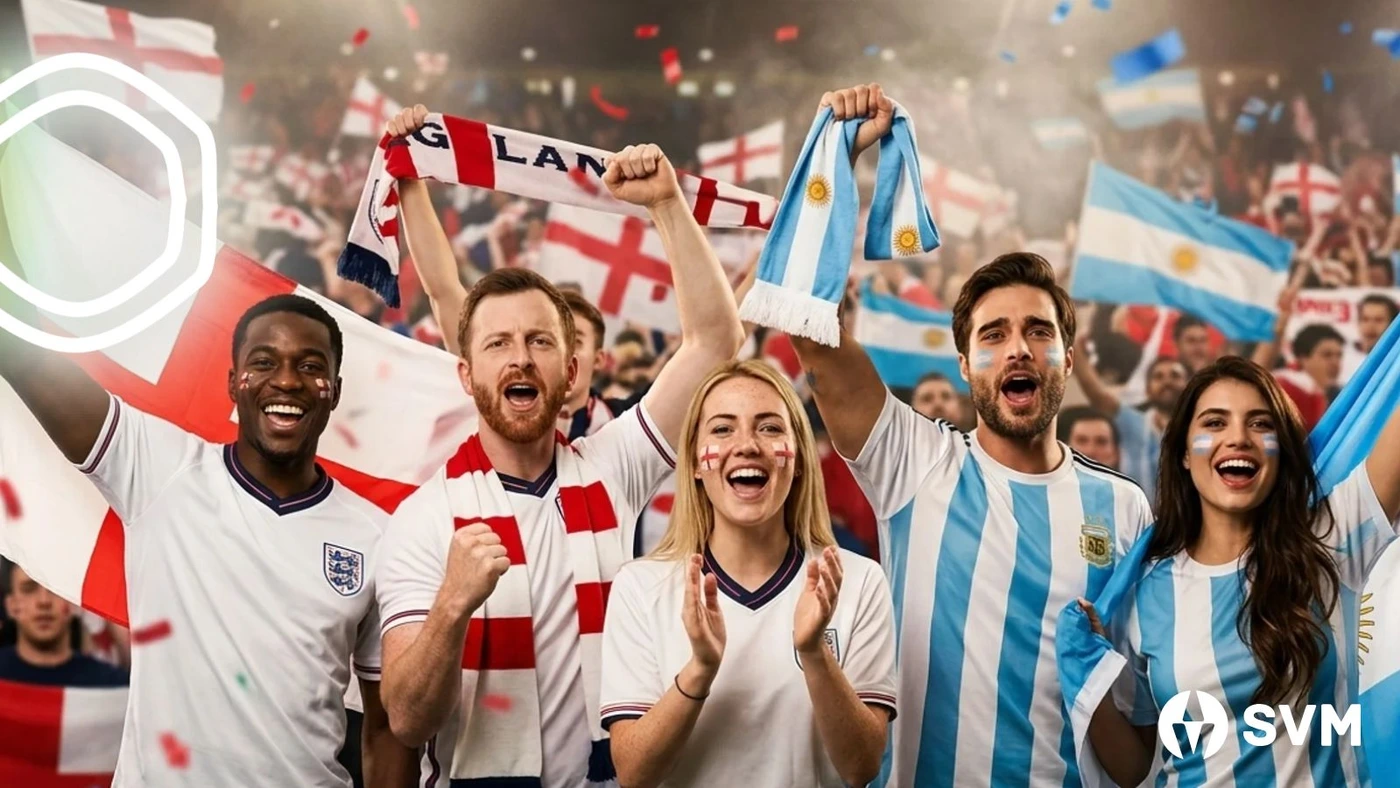
England vs Argentina: Inside the Numbers and the Plans That Will Shape a Semi-Final
Twenty-one years since they last met on this stage, England and Argentina walk out at Atlanta's Mercedes-Benz Stadium for a World Cup 2026 semi-final that pits the tournament's most concentrated attack against its most decorated player. This is not a game to be called in advance. It is a game to be read, layer by layer, through the individual output and the manager blueprints that got both sides here. Below is what the data says, and where the tactical edges sit.
England's two-man engine
Start with the number that reframes everything.
and Jude Bellingham have scored 12 of England's 13 goals at this tournament, a 92.3% share that, per Opta, is the most concentrated a team's attack has ever been at a World Cup among sides scoring 10 or more goals. The pair have scored each of England's last nine goals between them. Marcus Rashford's opener against Croatia is the only strike by anyone else.
Both men sit on six goals apiece, making Kane and Bellingham the first pair from the same nation to each reach six or more in a single World Cup edition. Bellingham's contribution has been the more dramatic: a double against Norway in the quarter-final, having already struck against Croatia, Panama and Mexico. Kane, the captain, has been the closer, rescuing England in the round of 32 against DR Congo and adding to his tally through the knockouts.
Here is the honest tension in England's story. Opta's own analysis frames the reliance as a genuine question rather than a straight strength, and the route reflects it: pushed by DR Congo, a defensive backs-to-the-wall 3-2 win over Mexico with ten men, and a Norway quarter-final settled only after extra time. England have scored 13 and conceded 6 across their six games, with two clean sheets. This is a side that finds a way more than it overwhelms. History offers reassurance for those leaning on two elite attackers, though: of the seven most attack-concentrated teams in World Cup history, six reached at least the semi-finals. Dependence on genius is not, on the evidence, a fatal flaw.
Messi, the protected conductor
arrives at 39 and somehow still climbing. He has eight goals at this tournament and has taken sole ownership of the all-time World Cup scoring record, now on 21, two clear of Kylian Mbappe. His 10 career World Cup assists are the most by any player since 1966, two ahead of Diego Maradona. In his last eight World Cup knockout appearances, Messi has been directly involved in 13 goals, seven scored and six created.
What makes him so difficult to plan against is where he now operates. Under Lionel Scaloni, Messi functions as a protected playmaker, a "quarterback 10" who conserves energy inside a roughly 20-yard radius and waits to deliver the pass that breaks two or three defensive lines. The workload numbers back the role reversal in emphasis: Messi has attempted 34.0% of Argentina's shots at this World Cup, up from 32.0% in 2022. Across the last two tournaments, only Robert Lewandowski has carried a greater share of a team's shooting burden. Argentina, the reigning champions, are not cruising either. They scraped past Cape Verde, needed a late comeback to edge Egypt 3-2, and required Julian Alvarez's extra-time strike to see off Switzerland 3-1. Alvarez, notably, has matched a Maradona scoring marker of his own this summer.
The manager chess match
This is where the semi-final will be won or lost, and both coaches deal in flexibility rather than fixed shapes.
Thomas Tuchel has turned England into what analysts call a tactical chameleon: a disciplined out-of-possession mid-block that expands into an asymmetric 3-2-5 in build-up, with Myles Lewis-Skelly inverting into midfield and the forward line pinning the last defensive line. It is structured, spatially controlled and deliberately risk-averse. The strength is that England rarely lose their shape. The open question, and the one Tuchel's critics keep raising, is whether that control can flex fast enough when a knockout game turns chaotic.
Scaloni counters with a liquid system that reads as a 4-3-3 on the teamsheet but shifts between 4-2-3-1 and 4-1-4-1 by phase, often building through a 3-2-5 of its own. Reports suggest he is weighing a different formation specifically for England. The central battle is clear: Argentina's midfield engine and positional rotations exist to create the protected zone where Messi cannot be pressed, while Tuchel's mid-block is built precisely to deny that pocket of space between the lines. Whichever side imposes its structure on that 20-yard corridor gains the platform.
How it could develop
Expect a measured opening. Two coaches this cautious rarely trade blows early, and both defences have shown they can absorb pressure. The likelier flashpoints come from the patterns already visible this tournament: England's tendency to be dragged into tight, late-decided contests, and Argentina's habit of surviving scares before a moment of individual quality settles it. Set pieces loom large given Kane's aerial threat and England's reliance on structure. And the single biggest swing factor is territorial: if England's block holds Messi in front of the lines rather than between them, they blunt Argentina's chief creative source. If Messi finds the half-space even three or four times, the assist record did not happen by accident.
Reading performance and value early, before the market and the noise catch up, is the edge that separates a sharp view from a lucky one. That is the entire premise behind SVMarkets: the players moving these games are visible in the data long before the narrative arrives. This semi-final is a case study in it.
England have found a way in every round. Argentina have a player rewriting the record book as he goes. The tactical fight for the space behind England's midfield is the thread to watch.
Autor: John Dawson


Zona de desafios
0 jogos disponíveis
Últimas Notícias
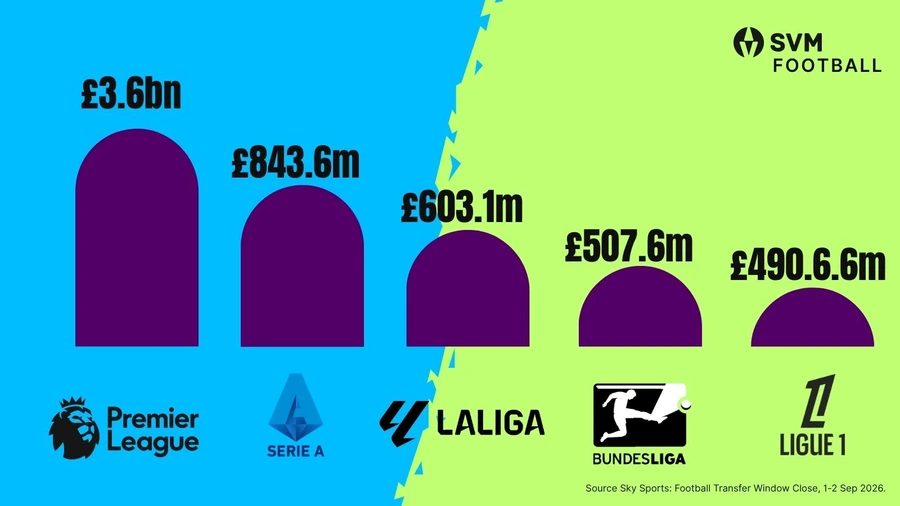
Premier League Transfer Market: Buyer Of Last Resort
Premier League clubs spent a record £3.56bn in summer 2026 while Ligue 1 banked a £511.3m surplus. The gap is not wealth. It is two different business models.
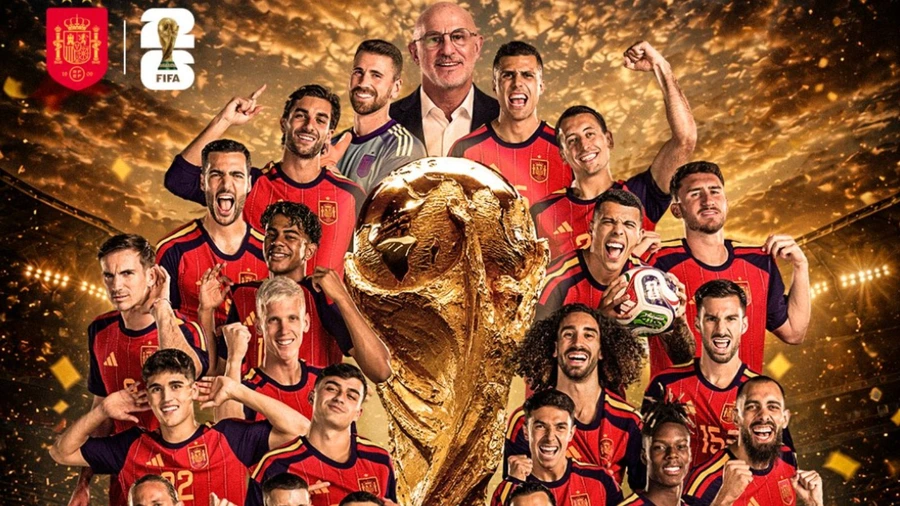
Spain Are World Champions: La Roja Outlast Argentina to Win World Cup 2026
Spain are champions of the world again. Sixteen years after their first title, Luis de la Fuente's side beat Argentina 1-0 after extra time at the New York New Jersey Stadium, with substitute Ferran Torres settling a bad-tempered final and ending the reigning champions' reign.
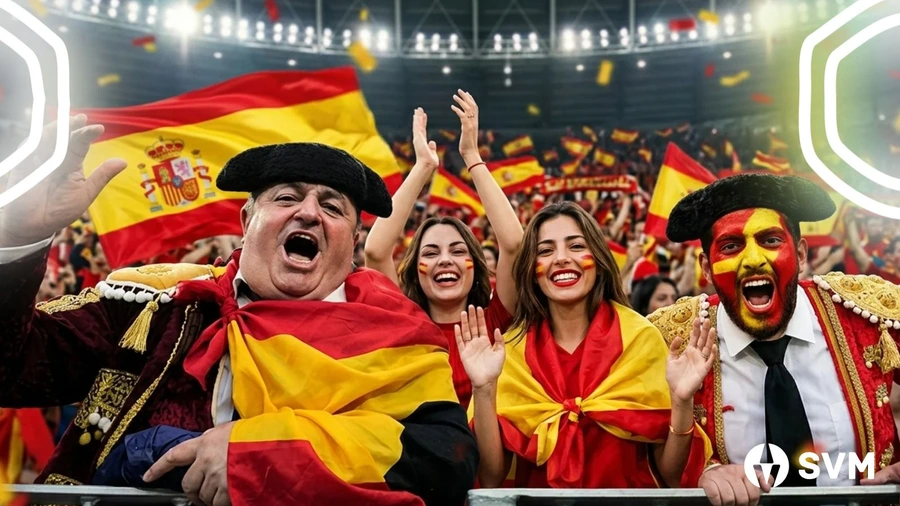
Spain vs Argentina: The World Cup 2026 Final in Numbers
Spain arrived as the tightest defence in 60 years. Argentina arrived as the comeback kings with a 39-year-old still rewriting the record book. The World Cup 2026 final is a clash of two football identities, and the Opta numbers tell the whole story.

England 6-4 France: Anatomy of a 10-Goal Bronze-Final Classic
Saka's hat-trick, Mbappe's record, a 4-0 lead nearly blown: the player performances, manager calls and key moments behind England 6-4 France.
Tuchel vs Deschamps: Two Tactical Blueprints, One World Cup Lesson
How Thomas Tuchel's possession machine and Didier Deschamps' transition game shaped England and France at the 2026 World Cup, read through the performance data.
Argentina's Title Defence Is More Than Messi
Mac Allister, Alvarez and Lautaro did the scoring. Messi pulled the strings. Argentina are into the World Cup 2026 semi-finals on the strength of a whole squad, not one man - and that is exactly what makes the champions so hard to knock out.