
Tuchel vs Deschamps: Two Tactical Blueprints, One World Cup Lesson
How Thomas Tuchel's possession machine and Didier Deschamps' transition game shaped England and France at the 2026 World Cup, read through the performance data.
Before a ball was kicked in the WC 2026 third-place match, the more interesting duel was already on the touchline. Thomas Tuchel and Didier Deschamps arrived at the same stage of the tournament having taken almost opposite routes there, and the way each side was built tells you more about modern international football than any single scoreline. One coach chases control. The other weaponises the moment control breaks. Both reached the last four. Both were beaten by the two sides now contesting the final. The gap between their methods, and the ceiling each method hit, is the real story worth keeping.
The payoff: control versus the counter
Reduce it to one line each and the contrast is stark. Tuchel's England want the ball, shape the pitch, and squeeze the life out of a game. Deschamps' France are content to cede it, stay compact, and strike in transition. In qualifying, England did not drop below 70% possession in a single match. France, by contrast, spent the knockout rounds soaking pressure and waiting: they went in level at half-time in both the round of 16 against Paraguay and the quarter-final against Morocco, then broke through after the interval each time. Same destination, opposite maps.
How Tuchel built England
Tuchel's structure was the most deliberate at the tournament. In build-up, England formed a 3-2-5, with left-back Myles Lewis-Skelly inverting into midfield and the front line pinned high against the last defensive line. It is a positional system designed to manufacture control and overloads rather than to unleash individual flair, and for six matches it delivered a run to the semi-finals.
The flaw was hidden in plain sight, and the performance data names it. England's reliance on two players was, by Opta's measure, greater than any team in World Cup history at a minimum threshold of ten team goals. Harry Kane and Jude Bellingham scored six goals apiece, becoming the first pair from the same nation to each reach six in a single edition, and between them accounted for 12 of England's 13 goals. Bellingham scored once every 168 minutes under Tuchel, the best rate of his career under any coach. Magnificent, and precarious. A control side that scores almost exclusively through two men has no plan C when those two are shackled.
That precarity showed in the semi-final. England led through Anthony Gordon on 55 minutes, then surrendered the very thing Tuchel's system exists to protect. From Gordon's goal to Lautaro Martinez's 92nd-minute winner, England had 12% possession to Argentina's 88%, and their five shots across the whole match were their fewest in a World Cup game in 60 years. The control machine lost control at the worst possible moment.
How Deschamps built France
Deschamps offered the opposite template: a rigid 4-2-3-1 with a double pivot shielding the back four, wide forwards tracking back, and central lanes deliberately congested. France did not try to dominate the ball. They tried to survive phases and then punish, feeding direct passes to a front four that could win a game in ten seconds.
The system had one towering asset: Kylian Mbappe. His numbers are the tournament's headline act - 8 goals and 3 assists for 11 goal involvements, the most by any player at a single World Cup since Gerd Muller in 1970. He became only the second man to reach 20 career World Cup goals, level with Lionel Messi on 17 non-penalty goals, and he has now scored two or more in seven different World Cup matches, three more than anyone in history. Around him, Deschamps rotated Desire Doue and Bradley Barcola alongside the fixed points of Michael Olise and Ousmane Dembele.
But a transition side lives and dies by the quality of its outlet, and Spain found the off-switch. In the semi-final, La Roja restricted France to roughly 0.3 xG from 10 shots, crowded Mbappe in transition, and denied him the space where his run had been decided. France managed one shot on the scoresheet total that flattered them, lost 2-0, and suffered their first defeat of the tournament. The lesson mirrored England's: a single-lever team is only as good as its lever's freedom.
Three performers who defined the identities
The players are the clearest evidence of the two blueprints. Kane, now on 14 goals in 17 World Cup appearances, is the perfect striker for a control system: a fixed reference point who converts the chances a possession side laboriously builds. Bellingham, at his best rate under any manager, is the runner who gives that control a cutting edge. Mbappe is something else entirely - not the product of a system but the reason the system exists, a transition weapon Deschamps designed an entire structure to release.
Reading the signal before the crowd
The through-line for anyone who follows the game closely is that tactical identity is a leading indicator and results are a lagging one. England's over-reliance and France's transition dependence were visible in the performance data rounds before they cost each side a semi-final. Reading value and structural risk early, rather than reacting to the final scoreline, is the edge that platforms like SVMarkets (sportvalue.app) are built around. The receipts are usually on the pitch long before they hit the table.
The close
There is a neat symmetry to this third-place fixture. It is Deschamps' last match after 14 years, with Zinedine Zidane already lined up to inherit the France job, and it is Tuchel's first real chance to answer the critics who questioned his semi-final management. Two coaching eras, one heading out and one still proving itself, meeting at a stage neither wanted to reach. Whatever the result, the more durable takeaway is the contrast in method - and the shared truth that even the best blueprint has a ceiling when it leans too heavily on too few.
Autor: John Dawson


Zona de desafios
0 jogos disponíveis
Últimas Notícias
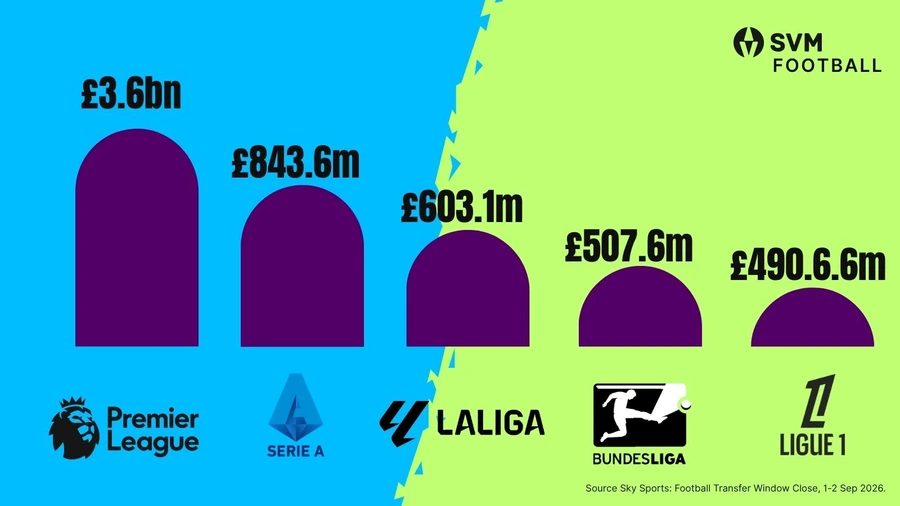
Premier League Transfer Market: Buyer Of Last Resort
Premier League clubs spent a record £3.56bn in summer 2026 while Ligue 1 banked a £511.3m surplus. The gap is not wealth. It is two different business models.
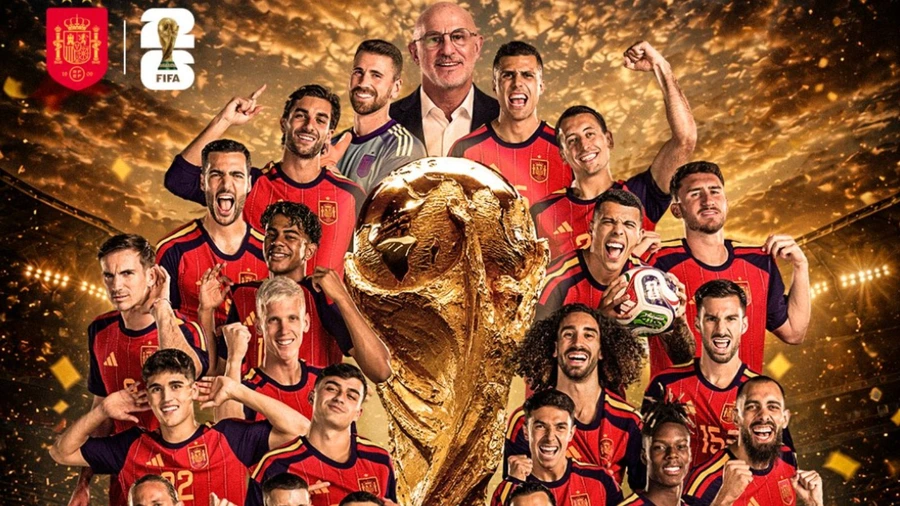
Spain Are World Champions: La Roja Outlast Argentina to Win World Cup 2026
Spain are champions of the world again. Sixteen years after their first title, Luis de la Fuente's side beat Argentina 1-0 after extra time at the New York New Jersey Stadium, with substitute Ferran Torres settling a bad-tempered final and ending the reigning champions' reign.

Spain vs Argentina: The World Cup 2026 Final in Numbers
Spain arrived as the tightest defence in 60 years. Argentina arrived as the comeback kings with a 39-year-old still rewriting the record book. The World Cup 2026 final is a clash of two football identities, and the Opta numbers tell the whole story.

England 6-4 France: Anatomy of a 10-Goal Bronze-Final Classic
Saka's hat-trick, Mbappe's record, a 4-0 lead nearly blown: the player performances, manager calls and key moments behind England 6-4 France.
England vs Argentina: Inside the Numbers and the Plans That Will Shape a Semi-Final

Argentina's Title Defence Is More Than Messi
Mac Allister, Alvarez and Lautaro did the scoring. Messi pulled the strings. Argentina are into the World Cup 2026 semi-finals on the strength of a whole squad, not one man - and that is exactly what makes the champions so hard to knock out.