Netherlands vs Japan: A Group F Opener With Real Bite
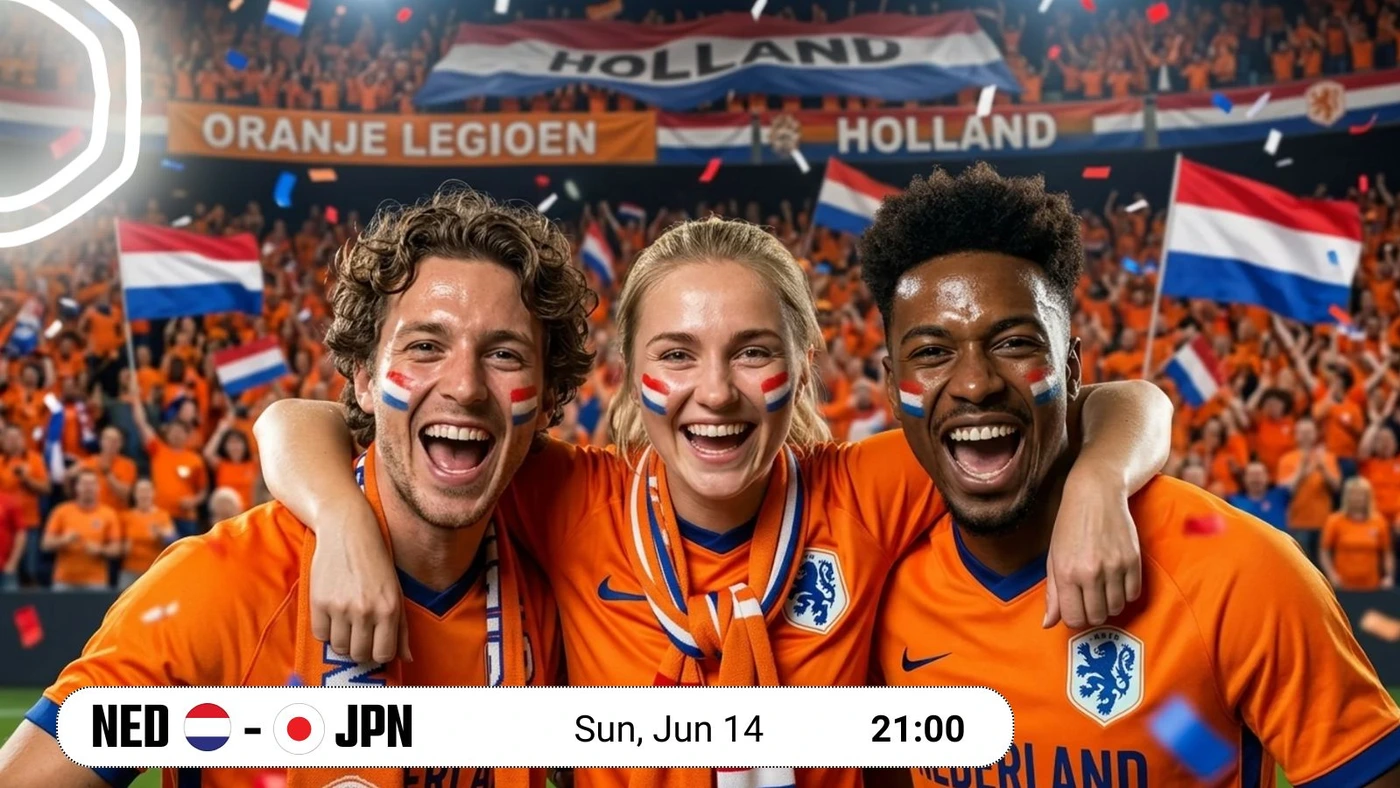
The Netherlands begin their World Cup against a Japan side built to counter. Koeman's possession game meets Moriyasu's low block, with Eredivisie top scorer Ayase Ueda leading a Samurai Blue attack missing the injured Kaoru Mitoma. Here is where the value sits at AT&T Stadium.
Some fixtures are billed as contests. This one is billed as a coronation. When Germany open their World Cup against Curacao at NRG Stadium in Houston on June 14, the four-time champions face the smallest nation ever to reach the finals, a Caribbean island of roughly 156,000 people making its tournament debut. The gap in resources, pedigree and squad value is enormous, and the betting market reflects it. For a punting audience, the question is not who wins but how Germany win: how quickly they break the underdog down, how comfortably they keep a clean sheet, and whether Curacao's house-money resilience can make the margins tighter than expected.
That framing is where the value lives. Germany are priced as overwhelming favourites, which strips the interest out of the result and pushes it toward performance markets and individual contributions. Curacao, meanwhile, arrive with nothing to lose and a story already written, having gone unbeaten through CONCACAF qualifying and needing only a point from their final fixture, which they secured with a 0-0 draw. Goliath is expected to win. The intrigue is in the manner.
Manager Tactics
Julian Nagelsmann has settled on a 4-2-3-1 that he has used throughout most of his Germany tenure, built to dominate the ball and overload the final third. He has confirmed an unchanged side from the pre-tournament win over the United States: Manuel Neuer in goal; Joshua Kimmich, Jonathan Tah, Nico Schlotterbeck and Nathaniel Brown across the back; Aleksandar Pavlovic and Felix Nmecha screening in midfield; and Leroy Sane, Jamal Musiala and Florian Wirtz operating behind Kai Havertz, with the in-form Nick Woltemade named among the substitutes. Wirtz and Musiala are designed to dovetail between the lines, both specialists at unlocking deep-lying defences, which is precisely the problem Curacao will present. With a packed, low block almost certain, Germany's task is patience and precision rather than territory, and Nagelsmann will expect his full-backs and creators to stretch and probe until the opening comes.
Dick Advocaat's plan is the inverse and entirely pragmatic. At 78 the Dutchman is the oldest head coach in World Cup history and the first to lead three different nations at the tournament, and he knows exactly how a heavy underdog survives a giant: defend deep, stay compact, frustrate, and look to counter through pace and the occasional set piece. He has named a 4-3-3: Eloy Room in goal; Armando Obispo, Riechedly Bazoer, Deveron Fonville and Sherel Floranus across the back; Leandro Bacuna, Livano Comenencia and Juninho Bacuna in midfield; and Tahith Chong, Jurgen Locadia and Sontje Hansen forming the front three, with top qualifying scorer Gervane Kastaneer among the substitutes. Curacao enter ranked around 82nd, the bottom seed in the field, and Advocaat's entire approach is built on organisation and discipline rather than ambition. The Blue Wave will not try to trade blows; they will try to make the game ugly.
Pre-Game Interview Highlights
Nagelsmann has been careful to frame the occasion without arrogance while still naming his target plainly. He described the fixture as a "David versus Goliath" scenario, likened it to a "German Cup game" where a big side must avoid a banana skin, and said his aim for his first World Cup match in charge is simply "the first three points." On his goalkeeper, the message was decisive: "All the players are fit and Manu will start," confirming that 40-year-old Manuel Neuer will line up at a fifth World Cup after Nagelsmann judged he had rediscovered his rhythm.
Crucially, Nagelsmann also went out of his way to respect the opposition coach. "Dick Advocaat is a brilliant guy," he said. "It's incredible history that they qualify for the World Cup for the first time, and it's also a great compliment for his work." It is the tone of a favourite determined to keep his players focused, aware that complacency is the only realistic threat to an otherwise straightforward afternoon.
Team Performance Expectations
Germany should control the game almost completely, and the realistic expectation is sustained pressure rather than a shootout. The interesting uncertainty is tempo and ruthlessness: against a side that will sit deep and waste time, the favourite's challenge is converting dominance into goals early enough to avoid a nervy, narrow scoreline. Germany carry the attacking quality to run up a comfortable margin, but tournament openers against debutants can be sticky, and the value question is whether they break the resistance quickly or labour through a frustrating first hour.
Curacao are not here to compete on the scoreboard. They are here to organise, frustrate, and sell their resilience as dearly as possible.
Curacao's expectation is survival and pride. A team this size, in its first World Cup, will treat every minute it keeps the deficit manageable as a victory of sorts, and Advocaat's defensive discipline gives them a structure to cling to. Expect a Germany side dominating possession and territory, and a Curacao side content to defend in numbers and threaten only on the break, backing its goalkeeper and its organisation to keep the night respectable.
Players to Watch
Germany
- Florian Wirtz is the creative key to unpicking a low block. In his debut season at Liverpool the playmaker registered 5 goals and 3 assists across 33 Premier League appearances, adjusting to the English game while remaining Germany's most inventive presence between the lines. Against a side that will defend deep, his ability to find pockets and thread the decisive pass makes him the most likely source of the moment that breaks the game open, and the highest-conviction creative exposure on the board.
- Jamal Musiala is the storyline of Germany's confirmed XI. Less than a year after a broken leg suffered in July ruled him out until January, the Bayern Munich playmaker returned to register 3 goals and 4 assists in just 15 Bundesliga appearances, a goal involvement of 0.93 per 90 minutes that shows how quickly his sharpness came back. Operating between the lines alongside Wirtz, he is one of the few players on the planet capable of unpicking a massed defence with a single touch, and his return to the biggest stage is the most compelling Germany subplot.
- Joshua Kimmich is the metronome the whole system runs through. Germany's captain registered 2 goals and 8 assists in the Bundesliga for Bayern Munich in 2025-26, a return that underlines his role as the team's chief supply line from deep. In a game Germany will dominate, his passing range and set-piece delivery against a massed defence make him a quietly central figure in turning control into clear chances.
Curacao
- Tahith Chong is Curacao's most recognisable talent and a confirmed starter. The former Manchester United man, now at Sheffield United, is the creative hub Advocaat builds around, averaging 1.48 key passes per game in the Championship this season, and he showed his finishing edge in qualifying with a brace against Bermuda. On the rare occasions Curacao break forward, his quality on the ball is their clearest, if slim, route to a famous moment against Germany.
- Juninho Bacuna is a confirmed starter who brings experience and an attacking edge from midfield. The FC Volendam man scored 3 goals during qualifying, chipping in from deeper areas as part of the brotherly Bacuna axis alongside Leandro, who starts beside him. His set-piece threat and willingness to arrive late in the box give Curacao a secondary scoring outlet, and his composure on the ball will be vital in the rare moments his side gets to play.
- Sontje Hansen offers pace and a goal threat from the right of the front three. The Middlesbrough winger found the net in the Championship this season and scored during the qualifying campaign, including in a heavy win over Bermuda on the road to the finals. His directness in transition is exactly the weapon an underdog needs against a high defensive line, and he gives Advocaat a genuine outlet to hit Germany on the counter.
The Takeaway
There is no pretending this is a coin toss, and any honest read starts there. Germany are vastly superior and rightly favoured, which moves the genuine interest away from the result and toward the how. The angles worth watching are tempo and ruthlessness for the favourite, with Wirtz, Musiala and Kimmich the men most likely to dictate how comfortable the afternoon becomes, and pure resistance for the underdog, with Chong's creativity and Hansen's pace, plus top scorer Kastaneer in reserve, offering Curacao slim but real counter-attacking hope. Treat Germany as overwhelming favourites whose only enemy is complacency, and Curacao as a historic debutant playing with house money. The result is not where the value sits. The margin and the manner are.
作者: John Dawson

挑战专区
0 个游戏可用
最新消息
Premier League Transfer Market: Buyer Of Last Resort
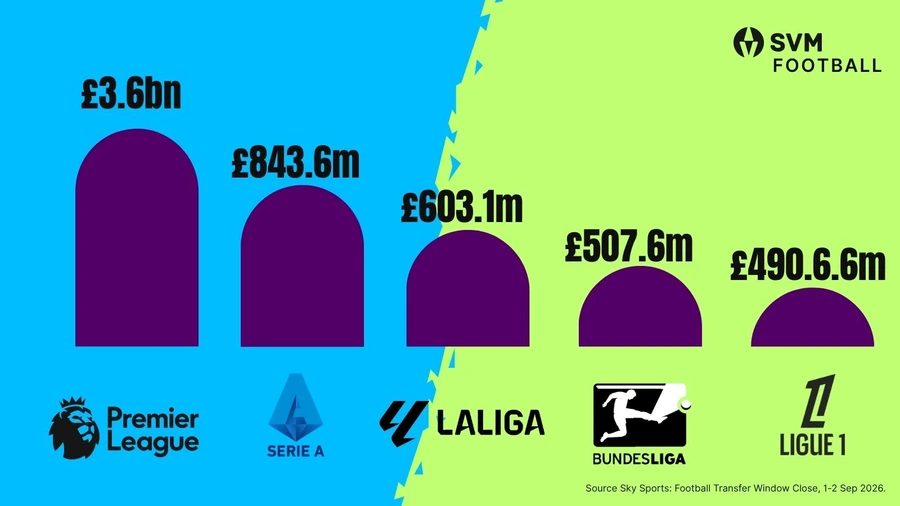
Premier League clubs spent a record £3.56bn in summer 2026 while Ligue 1 banked a £511.3m surplus. The gap is not wealth. It is two different business models.

Spain Are World Champions: La Roja Outlast Argentina to Win World Cup 2026
Spain are champions of the world again. Sixteen years after their first title, Luis de la Fuente's side beat Argentina 1-0 after extra time at the New York New Jersey Stadium, with substitute Ferran Torres settling a bad-tempered final and ending the reigning champions' reign.
Spain vs Argentina: The World Cup 2026 Final in Numbers
Spain arrived as the tightest defence in 60 years. Argentina arrived as the comeback kings with a 39-year-old still rewriting the record book. The World Cup 2026 final is a clash of two football identities, and the Opta numbers tell the whole story.

England 6-4 France: Anatomy of a 10-Goal Bronze-Final Classic
Saka's hat-trick, Mbappe's record, a 4-0 lead nearly blown: the player performances, manager calls and key moments behind England 6-4 France.
Tuchel vs Deschamps: Two Tactical Blueprints, One World Cup Lesson
How Thomas Tuchel's possession machine and Didier Deschamps' transition game shaped England and France at the 2026 World Cup, read through the performance data.