Spain Are World Champions: La Roja Outlast Argentina to Win World Cup 2026
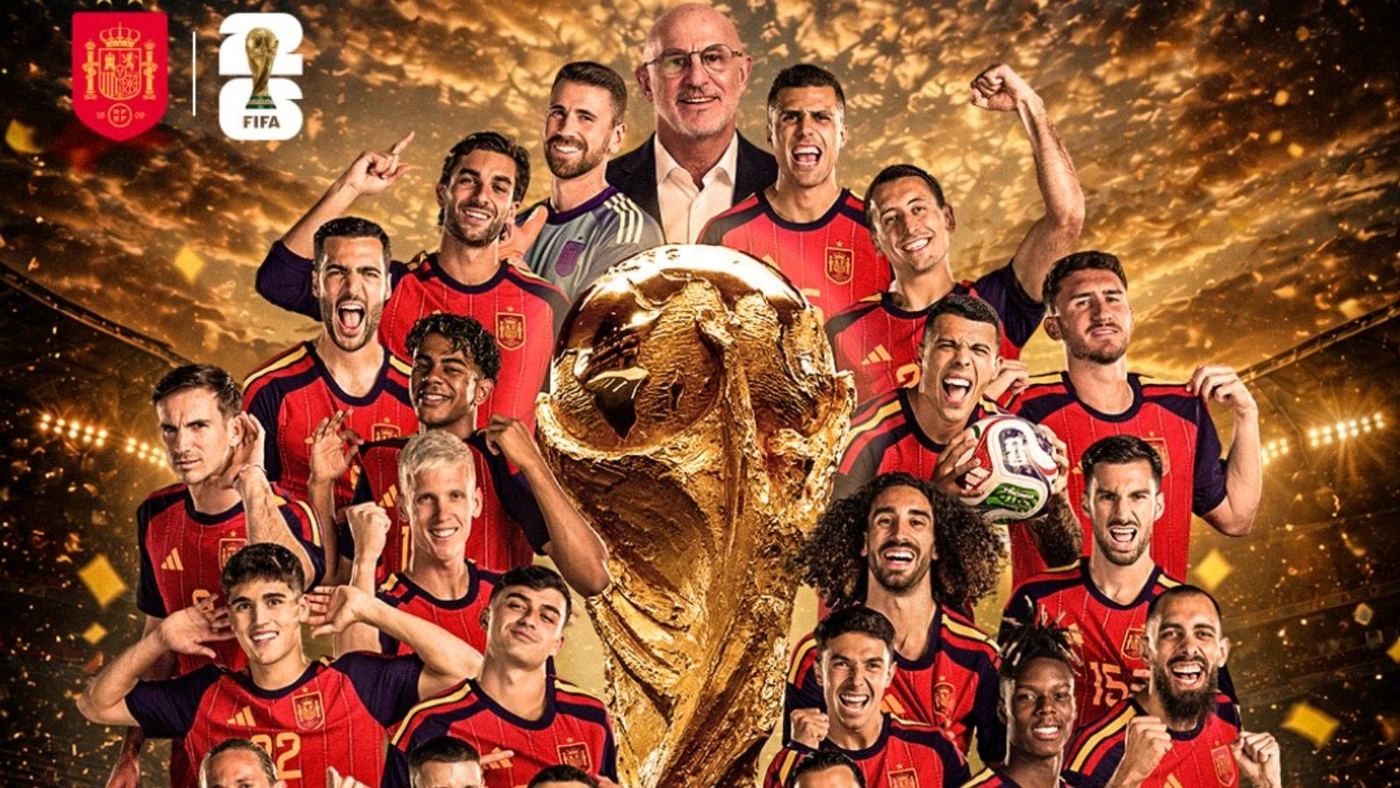
Spain are champions of the world again. Sixteen years after their first title, Luis de la Fuente's side beat Argentina 1-0 after extra time at the New York New Jersey Stadium, with substitute Ferran Torres settling a bad-tempered final and ending the reigning champions' reign.
The European champions are now world champions too, and they got there the way they had all tournament: with the ball, with control, and with a defence that simply would not break.
The night in one moment
For 105 minutes, Spain knocked and Argentina barricaded. The breakthrough finally came in the 106th minute, seconds into the second period of extra time. Pedro Porro delivered from the right, Nico Williams rose to head the ball back across the six-yard box, and there was Ferran Torres, on as a 62nd-minute replacement for Mikel Oyarzabal, to finish from close range. The Barcelona forward's goal was the difference in a match Spain had dominated from the first whistle to the last.
It was fitting that the decisive touch came from the bench. De la Fuente's substitutes have shaped this whole campaign, and once again a fresh attacker delivered when the starters could not find the opening.
Total control, by the numbers
The final scoreline flattered Argentina. Spain had 65.1% of the possession, took 20 shots to Argentina's 2, and hit the target 12 times. Argentina managed zero shots on target across 120 minutes and, remarkably, did not register a single shot in the entire first half. According to the tournament's data, Lionel Messi finished with just 15 touches, fewer even than the number Lamine Yamal managed high up the pitch. Argentina, for long stretches, could not get out of their own half.
Only Emiliano Martinez kept the margin respectable. The Argentina goalkeeper produced a string of saves to delay the inevitable, at one point denying Yamal from a free-kick that looked destined for the top corner. Without him, Spain would have won this comfortably inside 90 minutes.
Spain's defensive record is now the stuff of history. They conceded only one goal across the entire tournament, kept a sixth clean sheet in the final, and never trailed for a single minute on their way to the trophy. By avoiding defeat here, they also extended their unbeaten run to 38 matches in all competitions, moving clear of Italy for the longest such run by a European nation on record.
The flashpoint that broke Argentina
The contest turned on a red card. Deep into stoppage time at the end of normal time, Enzo Fernandez caught Pau Cubarsi with a rash challenge, and Slovenian referee Slavko Vincic showed the Chelsea midfielder a second yellow. Argentina, already struggling to lay a glove on Spain, would play the entirety of extra time a man light.
The frustration boiled over elsewhere too. Late on, a visibly agitated Messi caught Mikel Merino in the face as tempers frayed, a rare loss of composure from a player who has spent two decades rising above exactly these moments. It summed up a chastening night for the holders, whose route to the final had been built on late drama and Messi magic, and who found both switched off when it mattered most.
Passing of the torch
This was billed as Messi against Yamal, the 39-year-old great against the 19-year-old heir, and the symbolism was impossible to miss. Messi had become the first man to start three World Cup finals, a landmark on a night that, in all likelihood, marked his final act on the game's biggest stage. He leaves the tournament as one of its greatest ever contributors, but this last chapter belonged to the teenager on the other side.
Yamal did not score, but his 26 touches in dangerous areas, his willingness to take on defenders and his free-kick threat kept Argentina pinned back all evening. At 19 years and six days, he became one of the youngest players ever to appear in a World Cup final, and he ends the tournament with a winner's medal that the man he grew up idolising could not deny him. Before kickoff, Messi had called him "one of the best in the world right now, a tremendous player, a global star." By full time, Yamal had the trophy to match the billing.
Two managers, two philosophies
The final was also a clash of ideas. De la Fuente's Spain were the classy, ball-playing side throughout, patient in possession and relentless in the press, while Lionel Scaloni's Argentina increasingly leaned on a deep, defensive shape and the hope of one Messi moment. On the night, control beat containment.
De la Fuente now joins an elite group, and the game preserved one of its quirkier truths: every World Cup has been won by a manager from the same country as the team he leads. Scaloni, who had dreamed of becoming only the second man to retain the trophy after Italy's Vittorio Pozzo in the 1930s, instead watched his title defence end against a side that was simply better in every phase.
A team for the ages
Spain's triumph completes a rare double. As reigning European champions from 2024, they have now added the world title, confirming La Roja as the dominant force in the international game. The spine that carried them, from Unai Simon's record-breaking goalkeeping to Cubarsi's composure at 19, Marc Cucurella's tireless work at left-back, Pedri and Rodri's control in midfield and the game-changing depth of Merino, Torres and Nico Williams, is young enough to suggest this is a beginning rather than a peak.
For Argentina and Messi, it is the end of an era. For Spain, it is the start of one. Sixteen years after Johannesburg, the champions of the world speak Spanish again.
저자: John Dawson
챌린지 존
0개 게임 이용 가능